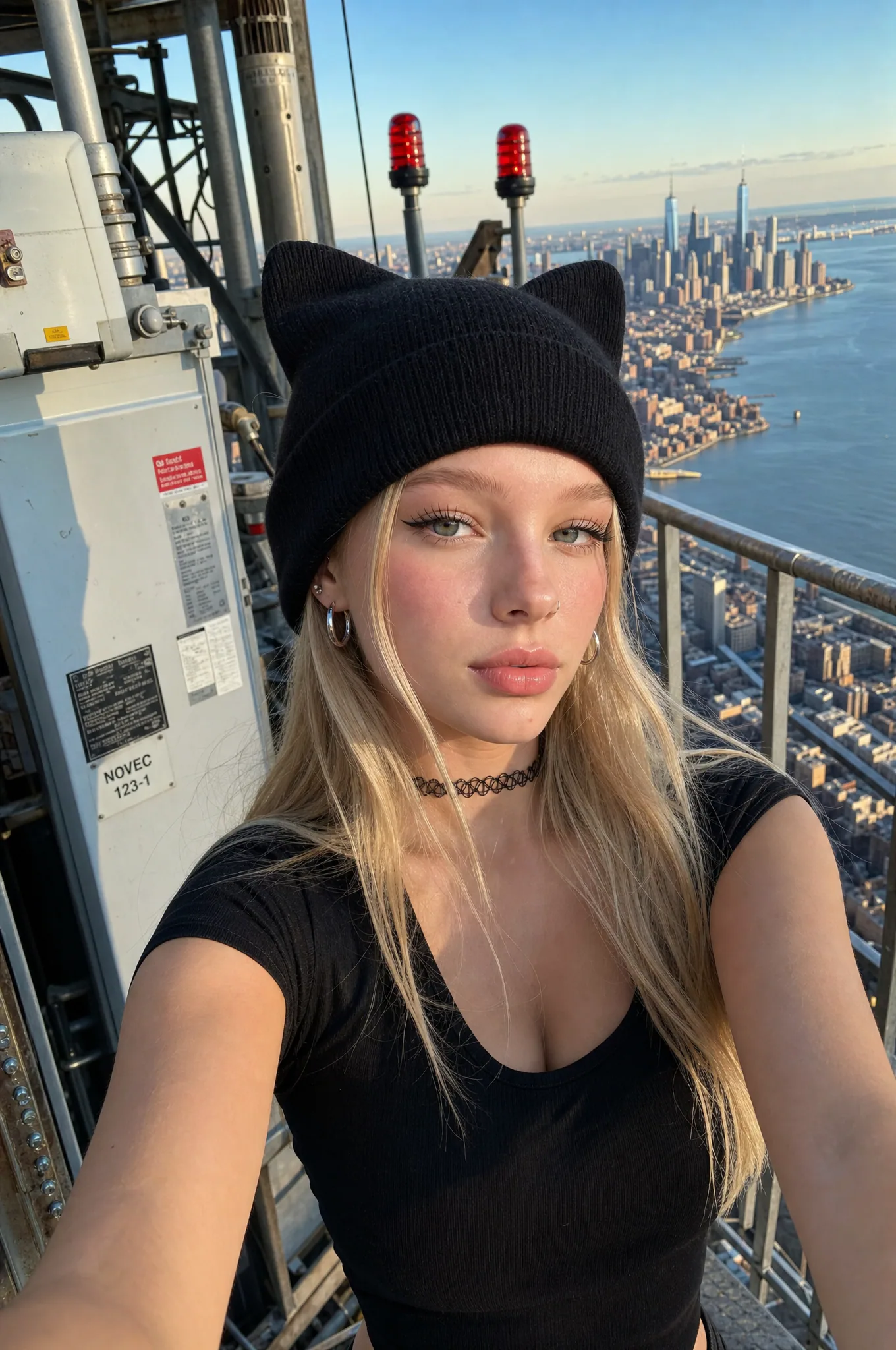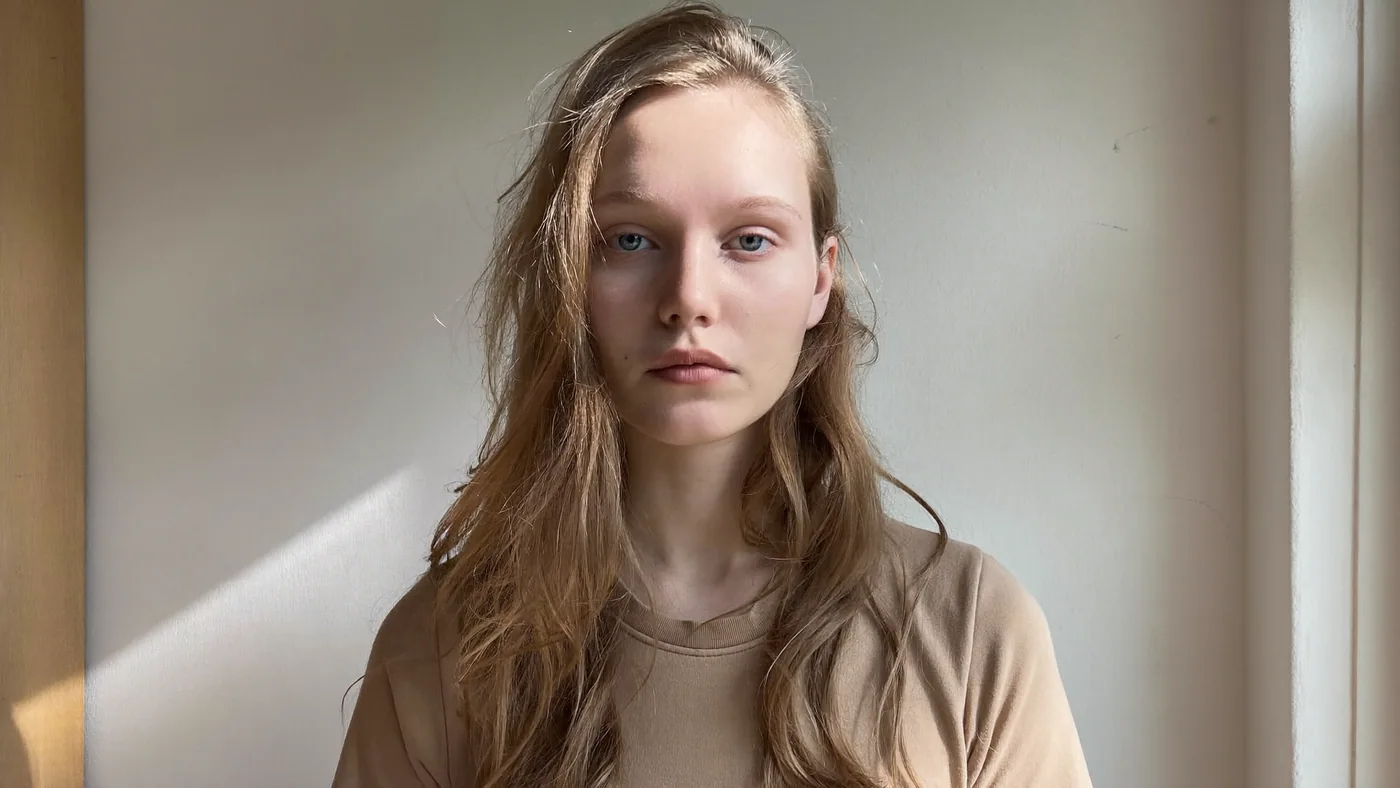



Instagram is the funnel. Fanvue is the till.
Almost every creator who asks 'how do I make money with Fanvue' is really asking two questions stacked on top of each other, and they have different answers. Fanvue is a subscription platform — it is very good at charging people who already want your content, and it does essentially nothing to find those people for you. Instagram is the opposite: enormous reach, near-zero direct monetization for an account your size. Neither one is a business on its own. Together they are.
So the structure that works is boring and specific: Instagram builds the audience, Fanvue charges it. Every hour you spend should be assignable to one of those two jobs. Content that grows reach goes on Instagram, free. Content people pay for goes behind the Fanvue paywall. The bridge between them — a link in bio and a handful of repeated story CTAs — is the entire conversion mechanism, and it is the part most people build last instead of first.
For an AI persona specifically there is one extra advantage worth naming up front: you are not constrained by shoot days. A human creator's cadence is limited by how often they can get in front of a camera. Yours is limited by how often you decide to publish. That only turns into money if the persona is recognizable enough that people follow *her* rather than the individual images — which is the first job, and the one this playbook starts with.
Step 1 — Build a persona that survives 300 posts
The failure mode that kills AI creator accounts is not bad images. It is a face that shifts between posts. Followers cannot form an attachment to someone whose jaw, eye spacing and skin tone change every Tuesday, and attachment is the only reason anyone ever pays a subscription. Before you post anything, you need a trained persona with a locked identity rather than a prompt you re-roll — the difference is explained in identity lock and diagnosed in detail in why your AI character looks different in every image.
Practically: train one model from a coherent reference set, then generate everything from that model. Training costs 720 credits one time; after that a feed image is 12–14 credits. Train your first AI model walks the whole process, and how to build a consistent AI influencer covers the persona decisions — age range, aesthetic, location, the three or four outfits she actually owns — that make a feed look like a life instead of a gallery.
- One trained model, not a prompt you keep re-rolling — consistency is the product
- A narrow visual world: 2–3 recurring locations, a stable wardrobe, one lighting signature
- A name and a backstory you can answer DMs with, written down before launch
- Fully synthetic, 18+ only — never train on a real person's photos without their documented consent
Step 2 — Grow the Instagram account (and keep it)
Instagram growth for an AI persona follows the same physics as growth for anyone else, with one hard constraint layered on: your feed has to stay safe-for-Instagram. The account that gets restricted is worth nothing, and a restricted account takes the Fanvue funnel down with it. Treat the Instagram feed as the trailer, never the film.
Cadence beats brilliance here. One feed post a day plus a handful of stories is roughly 400 credits a month, which sits comfortably inside a €29 plan — see what an AI influencer costs for the full arithmetic. What you cannot buy is consistency of *showing up*, so plan the month in advance instead of deciding each morning; a 30-day content calendar is the format that survives contact with a busy week.
Reels do the reach work. Stills do the recognition work. Promote your strongest still of each set into a short motion clip and post it as a Reel — the persona moving is what makes her feel like a person rather than an art project, and it is the single biggest jump in follower quality most accounts get. Stories do the conversion work, which is Step 3.
- Post daily; treat a missed day as a real cost, because the algorithm does
- Keep the public feed unambiguously SFW — the paywall exists for everything else
- Reels for reach, carousels for saves, stories for the CTA — do not mix the jobs
- Reply to comments and DMs in the persona's voice; parasocial attachment is the asset you are actually building
- Label AI content honestly — the platform-by-platform label rules tell you exactly what Instagram expects
Step 3 — Build the bridge before you need it
This is the step people skip, and it is the one that decides whether an audience is worth money. A follower who likes your posts and never learns there is somewhere else to go is a follower forever. The bridge is small and repetitive: one link in bio, pointing at your Fanvue page, and a story CTA on a schedule rather than on a whim.
The link in bio should go to exactly one place. Link trees dilute intent — every extra option is a fork where some percentage of people choose nothing. If you want an intermediate page, make it a page that sells the Fanvue subscription, not a menu. And say what is on the other side: 'full sets + daily DMs' converts, 'exclusive content' does not, because it is what every other bio says. Check where that link actually opens, too: a tap from inside TikTok or Instagram lands in the app's own embedded browser, which is where most of these signups quietly die.
Do not wait for a follower milestone. Set the bio link up on day one with an empty-ish Fanvue page behind it. The first fifty subscribers almost always come from people who found you early and felt like they discovered you — and you only get that if the door was already open. If you have not created the Fanvue account yet, start it here and fill it in as you go; there is a full walkthrough on our how to make money with Fanvue page.
- One link in bio, one destination, described in concrete nouns
- A recurring story CTA — same slot, same framing, at least twice a week
- A pinned post or highlight that explains what subscribing actually gets someone
- Never DM a paywall link cold to a new follower; answer them first, invite second
Step 4 — Set the Fanvue side up so it actually earns
Fanvue's revenue comes from three layers, and creators who only build the first one leave most of the money behind. The subscription is the floor: recurring, predictable, and the reason someone is in your audience at all. Pay-per-view sets are the ceiling: individually priced drops sent to people who are already subscribed and already warm. Messages and tips are the middle, and for an AI persona they are the layer with the most headroom, because you can answer at a volume a human creator physically cannot.
Price the subscription low enough that saying yes is not a decision — the goal is volume and retention, not a high sticker. Then let the PPV drops carry the margin. A subscriber who pays a small monthly fee and buys two sets a month is worth several times a subscriber who pays a high fee and buys nothing, and the low-friction tier is what gets you enough people for the second number to matter.
Content-wise, your generation budget maps onto this cleanly: daily feed stills for Instagram, four exclusive sets a month for the paywall (roughly 15 images each), and one or two motion teasers to promote each drop. That is a real production schedule for one person and it fits a mid-tier credit plan — the full cost table is public. Fanvue publishes its own current revenue split and payout terms on its site; read them before you model your income, because those numbers change and this article is not the place to pin them.
- Subscription tier — low friction, positioned as the default yes
- PPV sets — 2–4 a month, priced individually, sent to existing subscribers
- Messages and tips — the layer AI personas scale best, and most creators underuse
- One teaser clip per drop, cross-posted to Instagram stories as the CTA
The honest math, and the honest timeline
Here is what the cost side actually looks like, because it is the only side you control. One-time: 720 credits to train the persona. Monthly: about 400 credits for daily feed stills, roughly 840 for four exclusive sets, and 210–420 per motion clip. A full month of the schedule above lands in the low thousands of credits — a €29–€69 plan depending on how much video you run.
The revenue side is where honest guidance runs out, and anyone quoting you a monthly figure is guessing. Subscription income is a function of audience size, conversion rate and retention, and all three depend on things nobody can predict from the outside: your niche, your posting consistency, how well the persona lands. What is predictable is the shape — near-zero for the first couple of months while the Instagram account has no reach, then a slow ramp that tracks follower growth with a lag, because the people who convert are rarely the people who followed yesterday.
If you want to model scenarios rather than hope, the earnings calculator lets you put your own audience and conversion assumptions in and see what falls out. Treat the output as a sensitivity test, not a forecast. And read how AI influencers make money before you commit to subscriptions as your only line — brand deals and product sales are slower to start but far less fragile than a single platform.
Label it, or lose it
Every durable version of this business is built on top of the disclosure, not around it. Instagram labels AI-generated content and expects you to as well; Fanvue's own positioning is explicitly AI-creator-friendly, which only works because the audience knows what they are subscribing to. In the EU, the AI Act's transparency duties make marking synthetic content a legal obligation rather than an etiquette question — what to label in 2026 covers the specifics, and AI disclosure is the short version.
The commercial rules matter just as much and get forgotten more often. If you promote a product, that relationship has to be disclosed under the FTC endorsement guides and their EU equivalents — the fact that the endorser is synthetic changes nothing about the duty. The same principle applies to us, which is why the Fanvue signup links in this article are marked as referral links: we may earn a commission if you sign up through one, at no cost to you.
The thing that gets accounts deleted is not AI. It is pretending. An audience that knows the persona is synthetic and subscribes anyway is a stable business. An audience that finds out later is a refund wave and a policy strike.
The 90-day version
Ninety days is roughly the point where the answer stops being noise. If the Instagram account is growing and nobody is converting, the bridge is broken — fix Step 3. If nothing is growing at all, the content is the problem, not the funnel. Deeper, platform-specific detail on the subscription side lives in the AI OFM guide, the subscription-platform use case and our Fanvue monetization page.
- Days 1–7: train the persona, write the backstory, create the Fanvue page, put the link in bio before you have anything to link to
- Days 8–30: post daily, SFW only, no selling — build a body of work and learn which formats get saved
- Days 31–60: start the story CTA cadence, publish your first two exclusive sets, begin answering DMs in-voice at volume
- Days 61–90: add motion teasers to every drop, test one PPV price point up and one down, and only now judge whether the funnel converts
- Throughout: label the content, keep the public feed clean, and do not change the persona's face
Primary sources
Official material used to review the time-sensitive claims in this article.
- Fanvue — creator platform — Fanvue
- Meta's approach to labeling AI-generated content — Meta
- Endorsements, influencers and reviews — US Federal Trade Commission
- Regulation (EU) 2024/1689 (AI Act) — EUR-Lex